

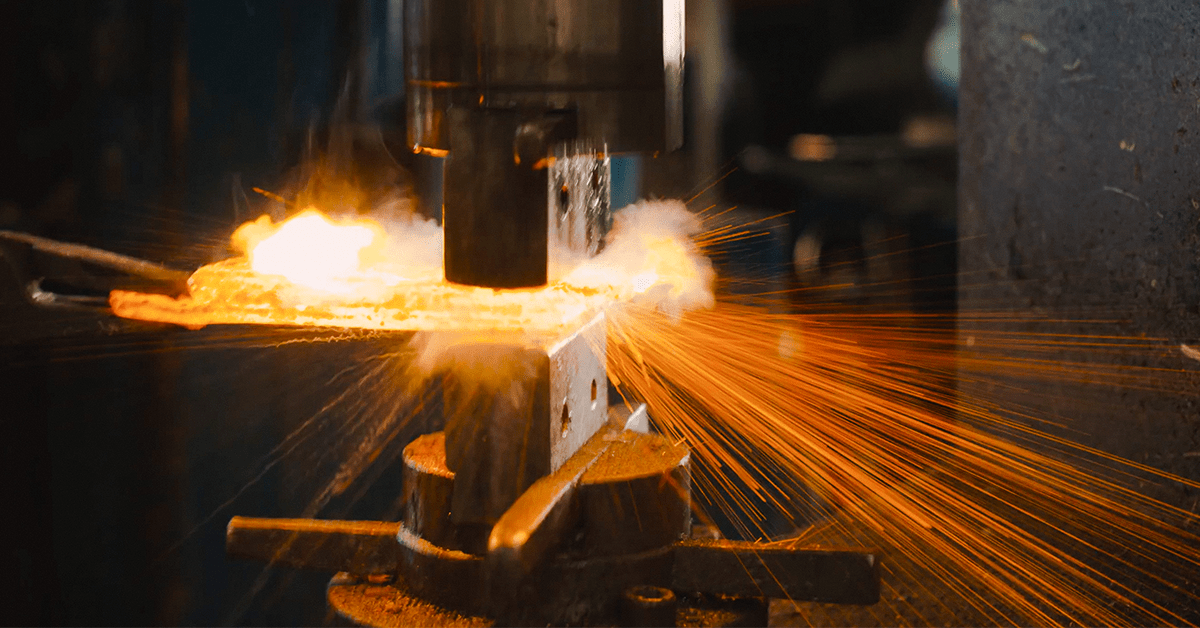
Modern manufacturing depends on metal shaping processes that deliver accuracy, strength, and consistency across many industries. Among these procedures, forging remains vital due to its ability to progress material integrity and performance. Understanding how heat and pressure interact with metal allows engineers to select the most well-organized method for each application. Forging Thailand has become a widely discussed term because of the rising demand for dependable forming solutions that meet strict quality needs while maintaining production efficiency and material consistency across different operational goals.
Understanding forging fundamentals
Forging shapes metal through compressive force to enhance strength and structure. The process changes internal grain flow to improve durability. Engineers rely on forging to create components that perform reliably under stress while maintaining consistent dimensional control.
Thermal influence on metal behavior
Temperature plays a major role in shaping outcomes during forming operations. Heat affects ductility and resistance to deformation. Higher temperatures allow easier shaping, while lower temperatures increase hardness and strength through work hardening effects.
Process flow differences
Hot forming occurs above recrystallization levels, while cold forming happens near ambient conditions. These differences affect tooling life, energy use, and surface finish. Each approach suits specific production goals based on desired part characteristics.
Surface finish quality
Cold-formed parts usually have smoother surfaces because there is no scale formation. Hot-formed parts may require cleaning or machining to meet surface requirements due to oxidation during heating.
Tooling stress levels
Higher temperatures reduce forming forces and tool stress during hot operations. Cold processes demand stronger tooling due to higher resistance. Tool material selection becomes vital for cost control and longevity.
Production speed considerations
Hot forming supports the rapid shaping of complex forms. Cold forming may involve multiple passes but offers faster cycle times for simple shapes. Production planning considers both speed and repeatability.
Energy consumption factors
Heating metal consumes energy but reduces force requirements. Cold forming saves heating energy but requires stronger presses. Engineers compare total energy use to determine overall efficiency.
Material utilization efficiency
Hot forging may lead to more material loss through scale. Cold forging often achieves near-net shapes with less waste. Efficient material usage helps reduce overall manufacturing cost.
Mechanical property outcomes
Hot-formed components gain improved toughness and uniform grain flow. Cold-formed parts achieve higher yield strength due to strain hardening. Property selection depends on end-use demands.
A clear grasp of forming approaches helps engineers match production needs with achievable results. Careful evaluation of strength, finish cost, and efficiency leads to better outcomes. Choosing wisely ensures dependable output while supporting long-term operational success through informed manufacturing decisions that align with Forging Thailand standards.